
Ignite Monthly Muse is a reflective message from the founder of Ignite Hot Yoga exploring themes rooted in yoga, presence, compassion, balance, and service. Each month, we dive into what it means to live a yogic lifestyle both on and off the mat, drawing insight from practice, community, and everyday life. These musings are an invitation to pause, reflect, and deepen your connection to yourself and our sangha.
The Lessons on Your Mat
For many people, yoga is simply fitness.
For others, it’s a lifestyle.
I like to think I land somewhere in between.
I’ll admit, I began my yoga journey with one thing in mind… weight loss. But 30 days in, something shifted.
I was calmer on and off the mat.
I responded differently.
I breathed differently.
I carried myself differently.
At that time, I knew nothing about the eight limbs. But I knew yoga had changed me.
And maybe that’s the real lesson; transformation often begins long before we have the language for it.
But where do we begin?
What lessons can we all learn from the mat?
We begin with the breath.
Breathing with intention, the foundation of our practice teaches us that one conscious inhale can soften a racing mind and bring us back to the present moment. Again and again, the breath becomes our anchor.
Through Hatha, we learn the art of balancing effort and ease. The pause between poses becomes a reset. Over time, we settle more quickly in that pause. We fidget less. We soften sooner. Hatha asks us to find steadiness without force and ease without collapse.
Power Yoga teaches us that we are stronger than we think. It shows us our edge and invites us to meet it. Discomfort is not danger. Holding Warrior II for a few breaths longer builds resilience. We learn to breathe through intensity instead of escaping it. Strength becomes less about muscle and more about the courage to stay.
Yin teaches us that stillness is powerful. We don’t have to move to transform. Sensation requires listening. You can’t power your way through a five-minute hold. Instead, you soften. You observe. You surrender to what is. And in that quiet, something shifts.
Hatha asks us to balance.
Power asks us to rise.
Yin asks us to receive.
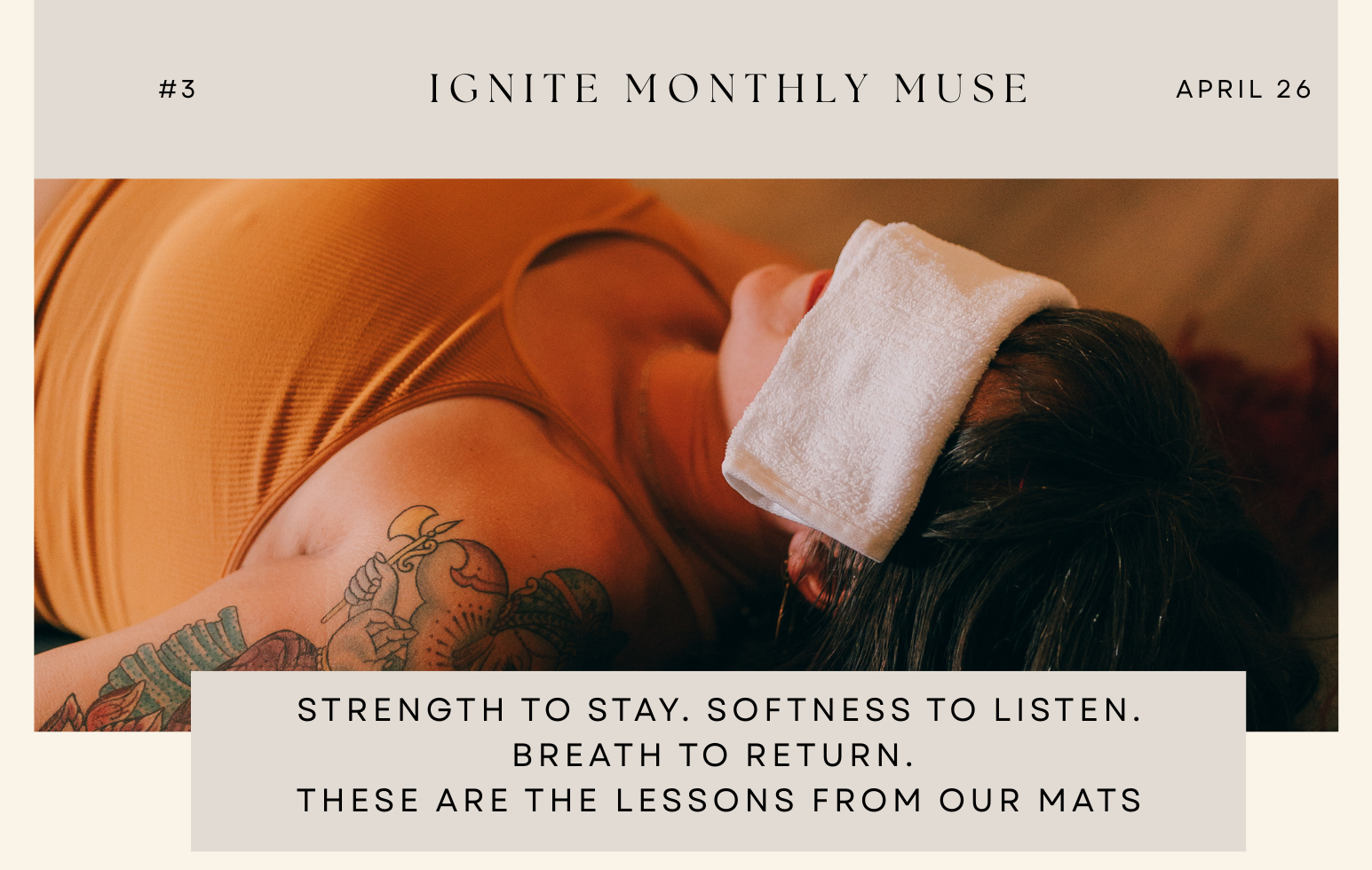
And then there is Savasana. That sacred stillness reminds us how deeply we need rest after effort. It teaches us that restoration is not weakness it is wisdom.
The mat teaches us how to practice ahimsa choosing compassion over criticism.
It teaches us satya noticing what is true in each moment.
It invites us into dhyana steady presence, breath by breath.
The mat teaches us how to breathe.
How to pause.
How to stay.
How to soften.
How to rest.
All of it prepares us to remain present whether the moment is intense or still.
And if we are paying attention, the mat isn’t just shaping our practice.
It’s teaching us how to live.
For many people, yoga is simply fitness.
For others, it’s a lifestyle.
I like to think I land somewhere in between.
I’ll admit, I began my yoga journey with one thing in mind… weight loss. But 30 days in, something shifted.
I was calmer on and off the mat.
I responded differently.
I breathed differently.
I carried myself differently.
At that time, I knew nothing about the eight limbs. But I knew yoga had changed me.
And maybe that’s the real lesson; transformation often begins long before we have the language for it.
But where do we begin?
What lessons can we all learn from the mat?
We begin with the breath. Breathing with intention, the foundation of our practice teaches us that one conscious inhale can soften a racing mind and bring us back to the present moment. Again and again, the breath becomes our anchor.
Through Hatha, we learn the art of balancing effort and ease. The pause between poses becomes a reset. Over time, we settle more quickly in that pause. We fidget less. We soften sooner. Hatha asks us to find steadiness without force and ease without collapse.
Power Yoga teaches us that we are stronger than we think. It shows us our edge and invites us to meet it. Discomfort is not danger. Holding Warrior II for a few breaths longer builds resilience. We learn to breathe through intensity instead of escaping it. Strength becomes less about muscle and more about the courage to stay.
Yin teaches us that stillness is powerful. We don’t have to move to transform. Sensation requires listening. You can’t power your way through a five-minute hold. Instead, you soften. You observe. You surrender to what is. And in that quiet, something shifts.
Hatha asks us to balance.
Power asks us to rise.
Yin asks us to receive.
And then there is Savasana. That sacred stillness reminds us how deeply we need rest after effort. It teaches us that restoration is not weakness it is wisdom.
The mat teaches us how to practice ahimsa choosing compassion over criticism.
It teaches us satya noticing what is true in each moment.
It invites us into dhyana steady presence, breath by breath.
The mat teaches us how to breathe.
How to pause.
How to stay.
How to soften.
How to rest.
All of it prepares us to remain present whether the moment is intense or still. And if we are paying attention, the mat isn’t just shaping our practice.
It’s teaching us how to live.
Community
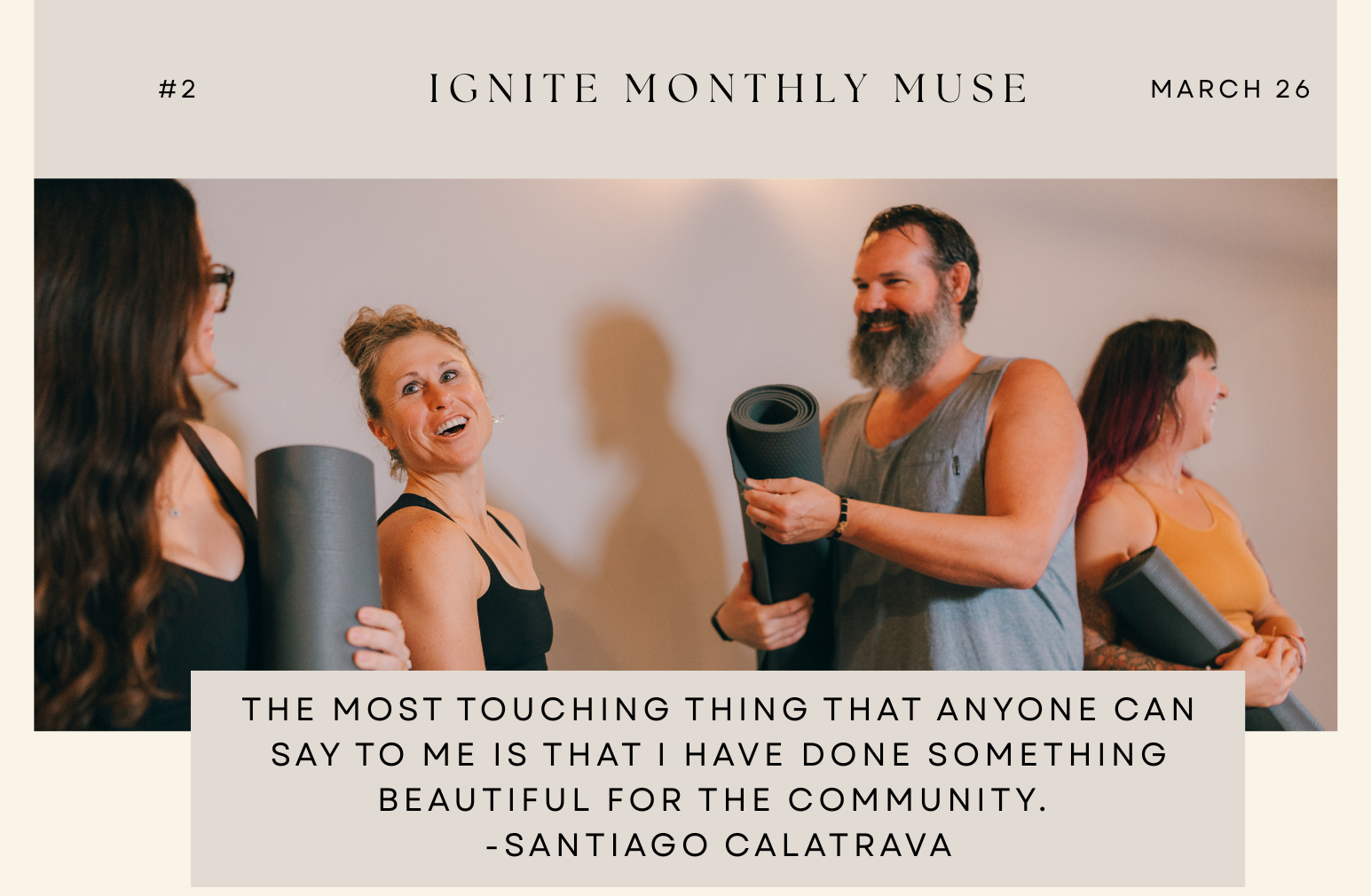
This month, I’ve been musing on something that feels essential to yoga, sangha, or kula meaning community.
Yoga isn’t just about the poses we practice in a heated room. It isn’t just about flexibility or strength. Yoga runs much deeper than that. At its core, it is about connection, to ourselves, and to one another. It asks us to consider how we move through the world and how our actions affect the people around us.
So I find myself wondering: Can we truly call ourselves yogis if we’re not working toward creating a better community?
This month, I’ve been musing on something that feels essential to yoga, sangha, or
kula meaning community.
Yoga isn’t just about the poses we practice in a heated room. It isn’t just about flexibility
or strength. Yoga runs much deeper than that. At its core, it is about connection, to
ourselves, and to one another. It asks us to consider how we move through the world
and how our actions affect the people around us.
So I find myself wondering: Can we truly call ourselves yogis if we’re not working toward creating a better community?
A couple of years ago, I traveled to Vrindavan in India, and I witnessed sangha in a way that changed me forever. The Vrindavan Parikrama is a sacred pilgrimage walk that circles the holy town. Each day, thousands of devotees walk roughly seven miles in devotion, chanting, praying, singing, or moving quietly in reflection. The walk itself takes about two to three hours.
But what moved me most wasn’t just the walking.
Some pilgrims choose to perform what’s called Dandavat Parikrama in devotion to
Krishna.“Dandavat” comes from danda, meaning stick. The body lies flat like a staff. The
practice looks like this:
They stand with folded hands in prayer.
They fully prostrate, lying flat on the ground with arms extended.
They mark the spot where their fingertips reach.
They stand.
They step forward to that mark.
And then they prostrate again.
They repeat this for the entire seven-mile journey. It can take days. Weeks. Sometimes longer.
And this is where I saw community in its purest form. When these men and women grow hungry, they simply sit quietly on the dusty roadside. They do not ask. They do not beg. They do not call attention to themselves. And the community brings food. Water appears. Care shows up. Without announcement. Without transaction. Without expectation.
That image has stayed with me.
Can you imagine a community or a world where we cared for one another in that way? Where needs were met not because someone demanded it, but because we were paying attention?
To me, that is yoga.
It’s not just what happens on the mat. It’s how we show up for each other. It’s how we serve. It’s how we build something bigger than ourselves.
At Ignite, we aim to create space for this spirit of community. One that welcomes you exactly as you are, whether you seek connection or quiet personal practice. A modern expression of an ancient truth: we belong to one another.
Momentum
As we move into February, I just want to pause and say: we see you.
We see you showing up on tired mornings, choosing your mat after long days, breathing through moments that feel challenging both physically and mentally. That kind of commitment matters. Every time you return to your mat, you’re building momentum, even when it doesn’t feel like enough.
Let’s keep the rhythm you’ve been creating. Let’s keep choosing presence, curiosity, and consistency. February 17th brings us into the Lunar New Year, the Year of the Horse. A year of momentum, movement, and freedom. It’s a time for confidence, visibility, and forward motion; a time to act courageously on what you’ve been cultivating. This is a year for stamina, passion, and joy in the body, inviting us to move with purpose and presence, both on and off the mat. As we leave the final weeks of the Year of the Snake behind, it’s a time to shed what no longer serves us; old habits, self-doubt, or anything holding our energy back!
As we move into February, I just want to pause and say: we see you.
We see you showing up on tired mornings, choosing your mat after long days, breathing through moments that feel challenging both physically and mentally. That kind of commitment matters. Every time you return to your mat, you’re building momentum, even when it doesn’t feel like enough.
Let’s keep the rhythm you’ve been creating. Let’s keep choosing presence, curiosity, and consistency. February 17th brings us into the Lunar New Year, the Year of the Horse. A year of momentum, movement, and freedom. It’s a time for confidence, visibility, and forward motion; a time to act courageously on what you’ve been cultivating. This is a year for stamina, passion, and joy in the body, inviting us to move with purpose and presence, both on and off the mat. As we leave the final weeks of the Year of the Snake behind, it’s a time to shed what no longer serves us; old habits, self-doubt, or anything holding our energy back!